

EXECUTIVE COMMITTEE
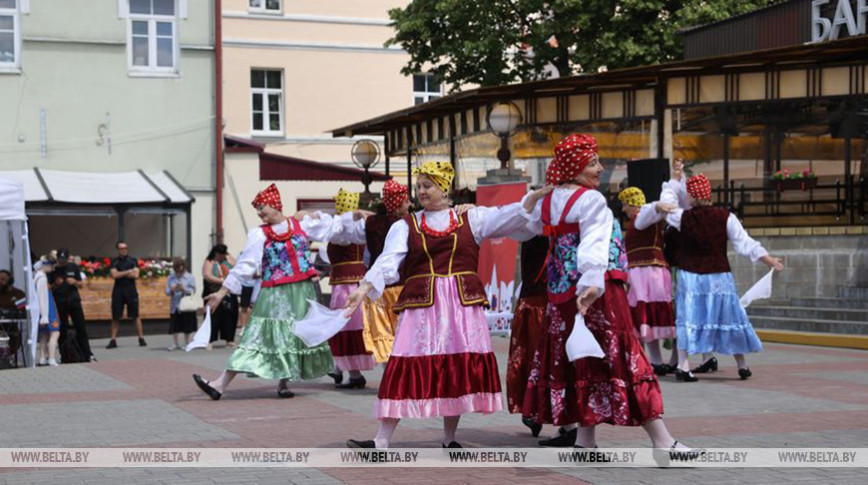
Olga Khachkova took reporters on a journey through the festival’s rich history. She recalled that the decision to launch the festival was made on 25 October 1995 by Belarus’ Culture Ministry. Just months later, in May 1996, the first post-Soviet celebration of ethnic diversity was held on Belarusian soil. For 30 years now, this multi-ethnic celebration has been traveling across the country, winning new admirers, participants, and friends every year.
The festival spans two full years, Olga Khachkova explained. It begins in districts, moves through regional centers, and culminates in a grand finale in the city of Grodno.
“With each passing year, the festival has grown bigger,” she said. “The number of participants and visitors has risen, as has the sheer number of festival events.”
The debut festival featured just 11 cultural and educational associations: Ukrainians, Russians, Poles, Jews, Tatars, Armenians, Moldovans, Lithuanians, Azerbaijanis, Koreans, and Germans. By June 2010, when the festival was held for the eighth time, 33 ethnicities were already represented. Remarkably, the festival itself helped create new communities. By the seventh edition, cultural associations of Greeks, Afghans, Georgians, Kazakhs, Chuvashs, Estonians, Palestinians, and Dagestanis had formed. During qualifying rounds, Bulgarian, Kabardino-Balkarian, and Arab communities also emerged.
The 10th festival opened on 14 September 2013 at the Belarusian State Philharmonic, drawing representatives from government agencies and public associations, foreign diplomatic missions, and countless participants and guests.
The 11th festival, held in Grodno in 2016, enjoyed the patronage of UNESCO. More than 2,000 people representing 38 ethnicities took over 22 national farmsteads, proudly showcasing their cultures and traditions.
This year, the Festival of National Cultures will bring together more than 800 representatives of 43 ethnicities, Belarusians included. Visitors can look forward to 20 vibrant farmsteads featuring songs, dances, ancient rituals, and the irresistible, colorful cuisines of different peoples.